Empowering Employees for Multilingual Selling
Adapting an existing translation web application into a mobile app to address multilingual challenges in the pharmaceutical sector.
Protected project
This entry is confidential or private. Please enter the password to view it.

Context and Problem
The company had a highly effective internal web translation tool for daily corporate operations (translating emails, presentations, and documents). However, a crucial segment of the workforce was completely underserved: the medical sales representatives.
Sales reps spend their days in the field visiting doctors to promote new medications. To build authority and connect better with clients, they needed to constantly translate medical journals, articles, and complex concepts from scientific papers into their native language. The corporate web version was not designed for on-the-go use, creating a communication barrier between the laboratory and the physician.
The Challenge and Technical Constraints
The goal was to extract the core engine of the web tool and transform it into an official mobile app for the company. However, we faced a significant technical hurdle:
- Lack of instant translation: Unlike popular commercial apps, our backend service did not support real-time translation as the user typed.
- The UX Solution: The interface design and system feedback had to be meticulously built around this limitation. We managed user expectations through clear loading states and asynchronous flows that wouldn't cause frustration during field visits.
Lean Approach and MVP Launch
Because the mobile app was being built on a corporately validated web service, we made a strategic decision: we skipped the traditional upfront generative research phase.
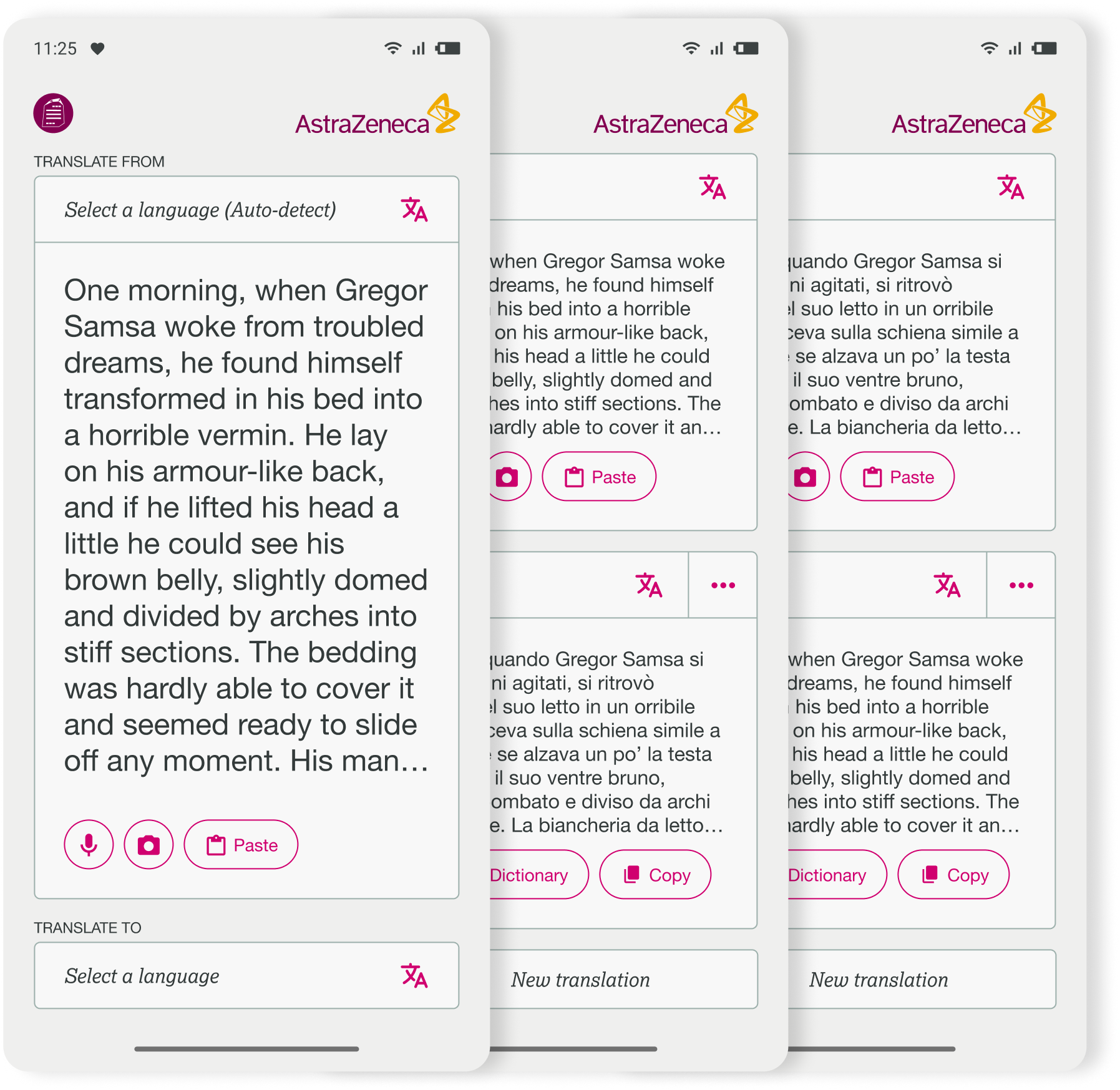
Instead, we opted for an agile (Lean UX) approach. We designed and developed an initial version (MVP) based on educated assumptions to get it into the hands of our primary users as quickly as possible. The goal was to fail fast, learn, and gather direct qualitative feedback from the sales reps in their real-world environment.
User Insights and Design Iteration
Testing the initial version with the sales reps revealed key insights that transformed the final product:
A. The Importance of "Copy and Paste"
- The Insight: Sales reps rarely typed long texts into the app; their primary behavior was copying excerpts from digital papers and pasting them into the translator.
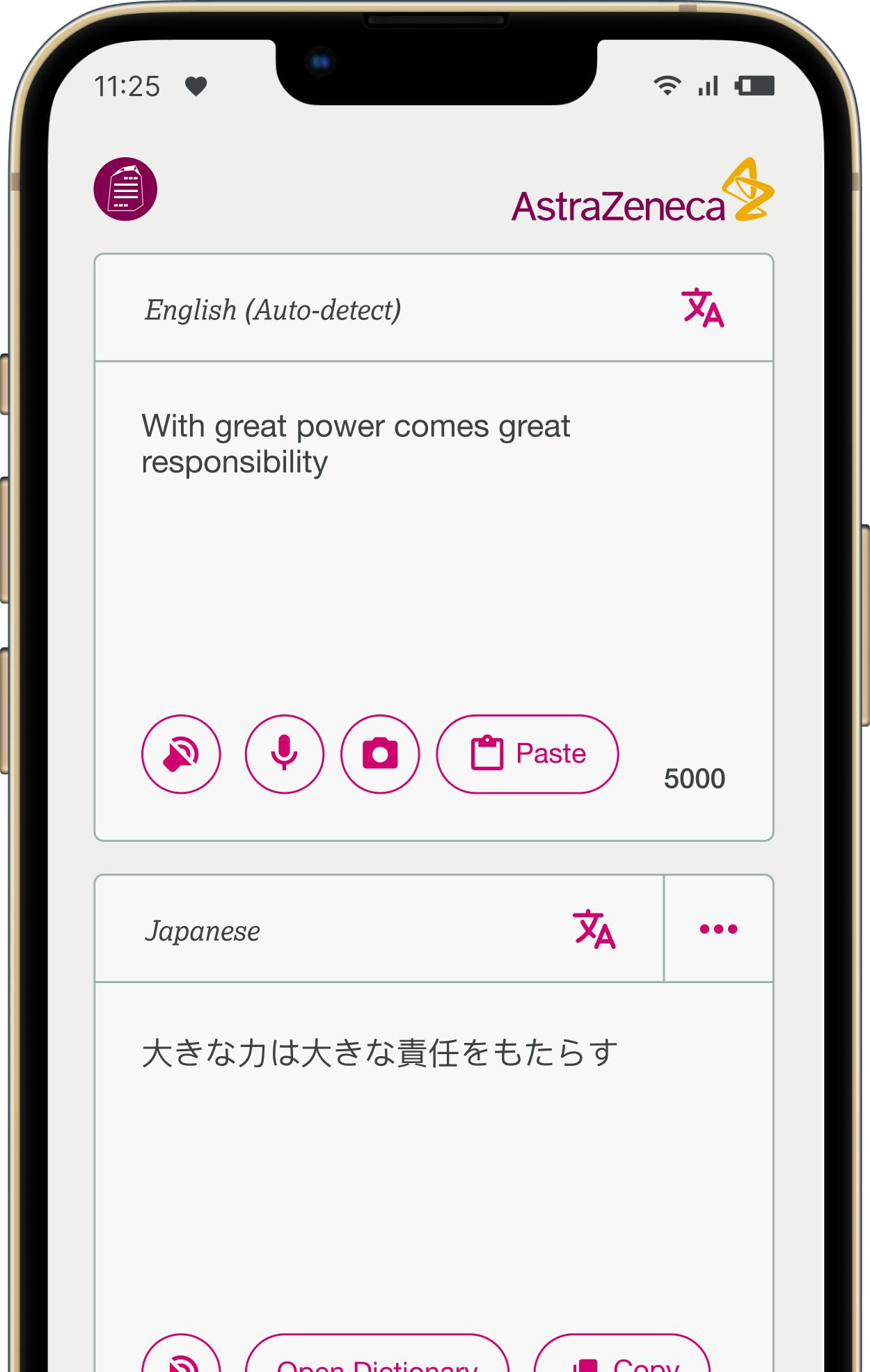
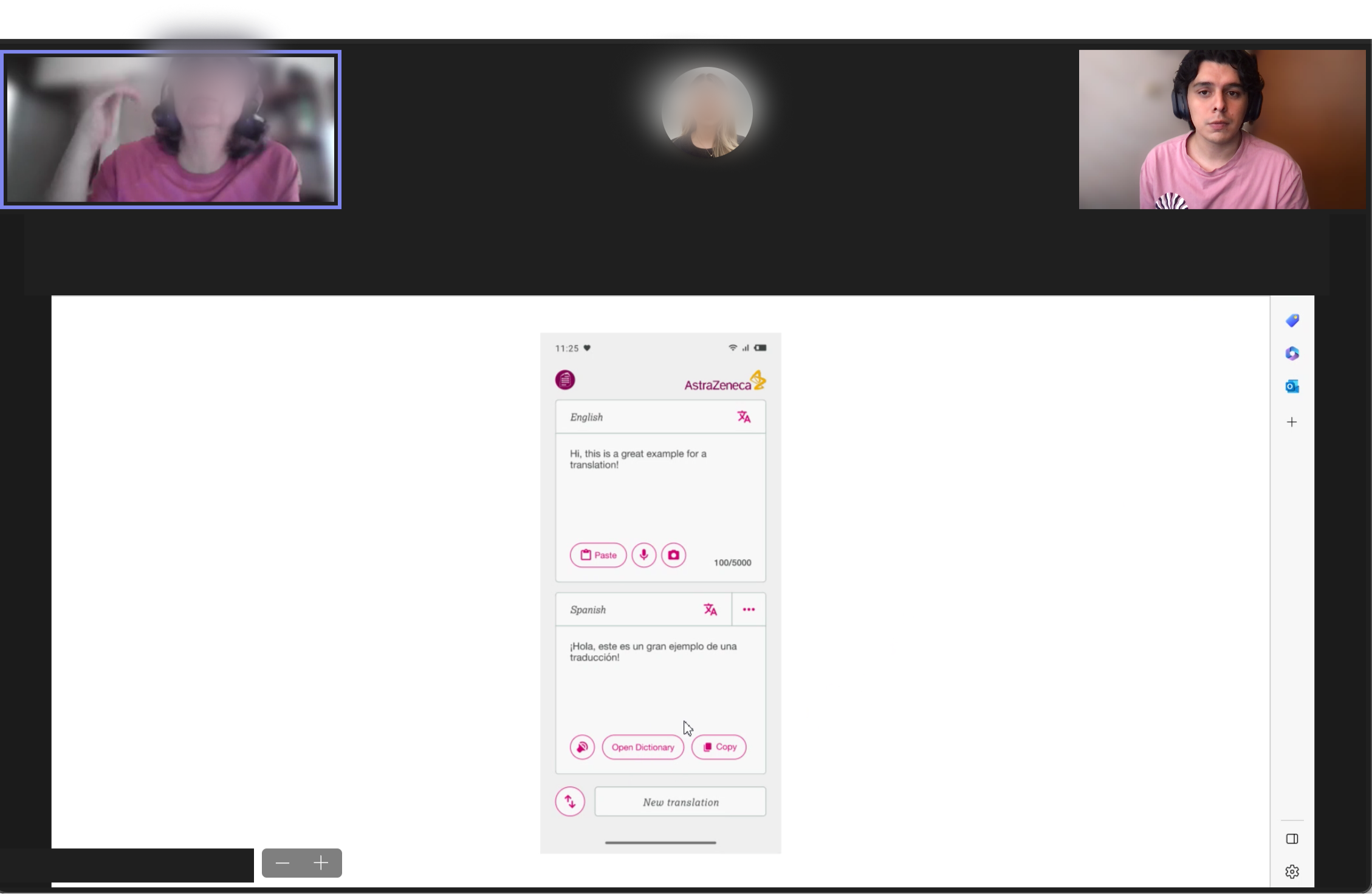
- The Iteration: We restructured the visual hierarchy of the main screen. We elevated the "Copy" and "Paste" actions, turning them into prominent buttons within the main translation flow. This reduced friction and saved invaluable seconds during medical visits.
B. Interactive Dictionary for Medical Terminology
- The Insight: Literal translations weren't always enough. Reps needed to deeply understand specific technical words within scientific articles. A dictionary wasn't a secondary feature; it was a core necessity.
- The Iteration: We redesigned the dictionary experience to be completely contextual. We pushed the technical development boundaries to create an interaction where users could tap a specific word directly within the translated sentence to view its definition, entirely eliminating the need to type the word into a separate search bar.
Results and Takeaways
- Empowering the Sales Force: We delivered an on-the-go tool tailored to the realities of fieldwork, allowing reps to instantly access scientific information in their language.
- Technology-Driven Design: We learned how to take a hard technical constraint (the backend translation delay) and mask it with a smooth UX flow that kept the user feeling in control.
- The Value of Early Feedback: This project proved that when there is no time for upfront research, a functional MVP is the best research tool. Listening to our users allowed us to pivot the interface toward what truly provided value (Copy/Paste and the interactive dictionary).