Making life choices easier to approach
How we redesigned the navigation and primary interactions of virtual schools to nudge students to study an early career.
Protected project
This entry is confidential or private. Please enter the password to view it.

In the United States, the traditional four-year college route is becoming financially out of reach for many families, often leading to crippling debt. This project aimed to design an accessible, remote learning alternative that combines standard K-12 education with job-ready vocational training (such as plumbing, electrical work, and junior administrative roles). Following a 12-week discovery and strategy phase, we successfully conceptualized a platform that bridges the gap between high school education and immediate workforce readiness.
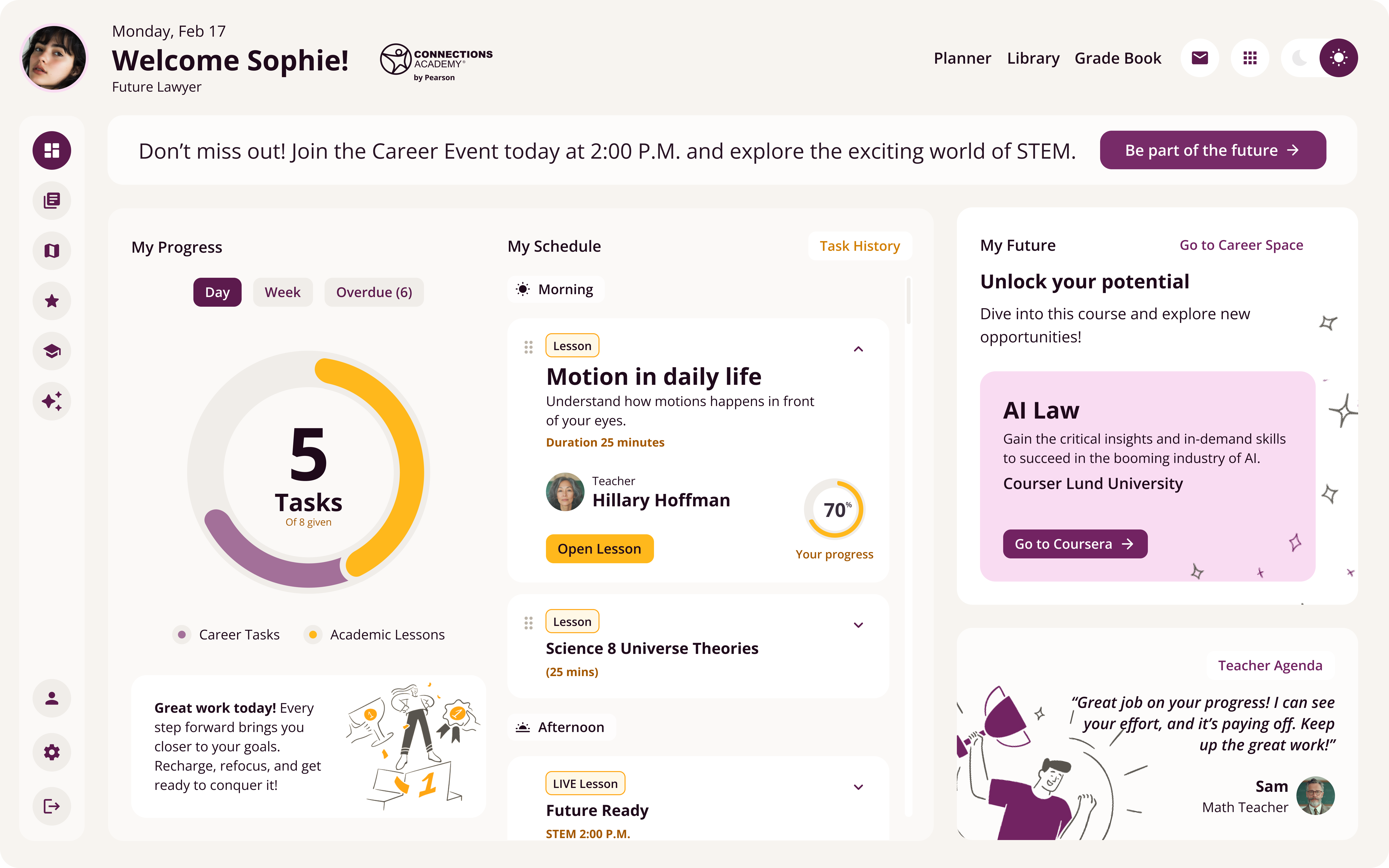
The Problem Space: Education vs. Debt
The current educational landscape in the US presents a significant barrier to entry for low-to-middle-income families. We needed to design a product that addressed two stark realities:
- The Debt Crisis: US student loan debt currently exceeds $1.7 trillion, with the average university student graduating with nearly $30,000 in debt.
- The Skills Gap: While college enrollment drops due to costs, the US is facing a massive shortage of skilled workers, with an estimated 3 million unfilled trade jobs projected in the coming years.
The Challenge: How might we create an engaging, remote K-12 platform that seamlessly integrates vocational training, empowering young students to graduate debt-free and job-ready?
Discovery & Strategy
To build a coherent and scalable platform, I participated in an immersive discovery phase, working directly with C-level stakeholders over 12 weeks. We conducted deep-dive sessions to understand business objectives, technical constraints, and market positioning. A key part of this process was mapping out the technical requirements to integrate standard K-12 curricula alongside specialized, module-based trade training.
During our research, we identified a critical user challenge: remote learning for young students often suffers from high abandonment rates. Industry averages show online dropout rates can be as high as 40-80% without proper engagement strategies, making student motivation a primary design focus for our team.
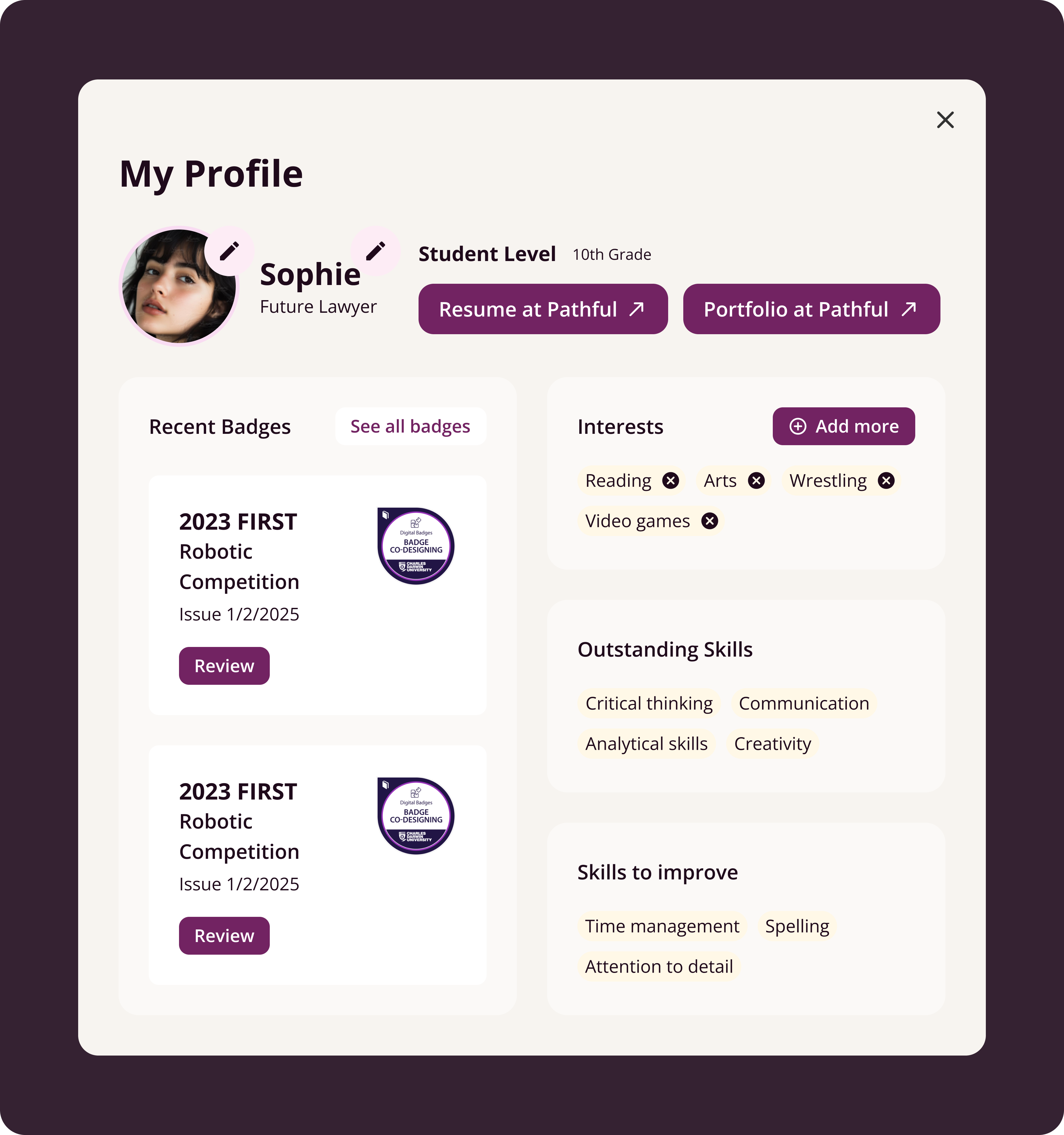
The Solution: Engagement Through Design
To solve the motivation barrier, we focused on giving the student complete autonomy and clear visibility of their progress. Knowing that gamification can increase e-learning engagement by up to 60%, we implemented positive reinforcement loops and structured the user experience around two key pillars:
- The Gamified Student Dashboard: We designed a centralized dashboard where students feel in control of their educational journey. This included integrating micro-interactions, progress bars, and achievement badges to reward consistency and milestone completions.
- Optimized Schedule Visualization: Time management is one of the biggest hurdles for young remote learners. We redesigned the class schedule UI to prioritize clarity and cognitive ease, providing students with a visually intuitive breakdown of their day that separates standard academic classes from hands-on vocational modules.
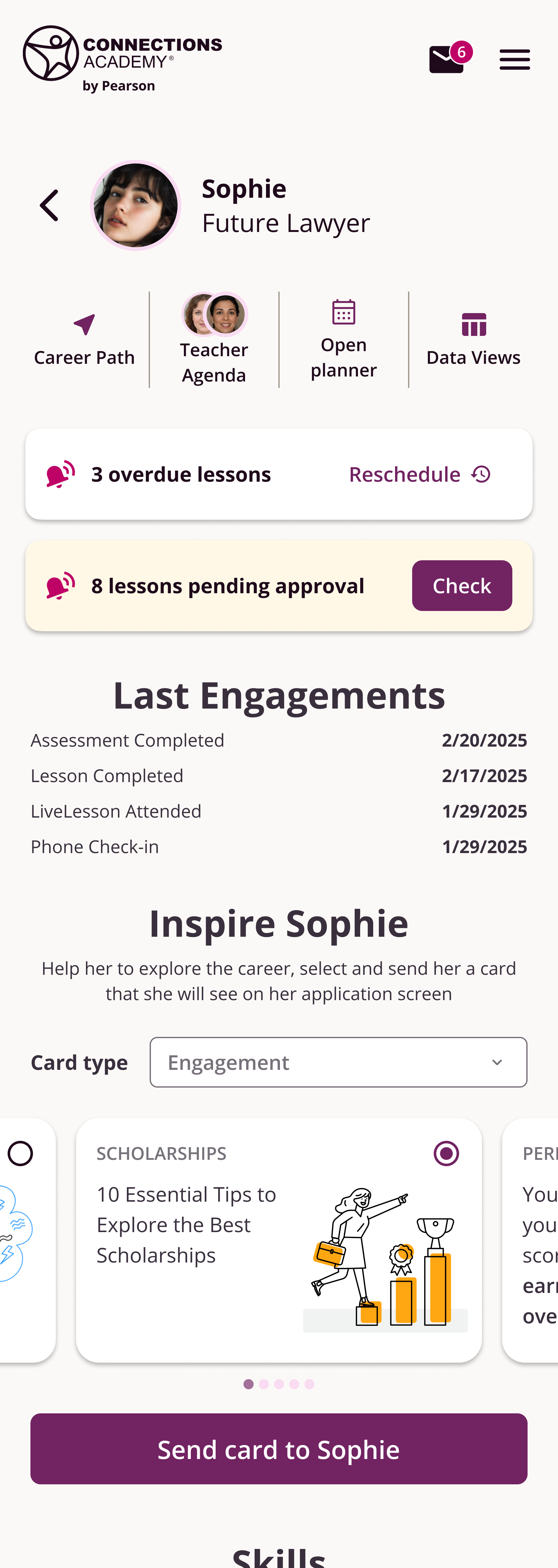
The Tutor Companion App
Recognizing that active mentorship increases a student's likelihood of academic success by over 30%, we designed a dedicated mobile application for tutors and guardians. To avoid the psychological pitfalls of intrusive monitoring or "helicopter parenting," the app allows tutors to send personalized educational and vocational suggestions rather than strictly tracking every click. This balanced approach maintains a supportive connection, fostering the student's intrinsic motivation and reducing academic anxiety while keeping them guided.
The Outcome
The discovery phase was a resounding success. By presenting a solution that was technically viable, aligned with business goals, and deeply empathetic to the students' needs, the project was officially greenlit by stakeholders for Phase 2 development.