Implications of User Experience Design and Digital Product Development from a Feminist-Decolonial Approach in Latin America
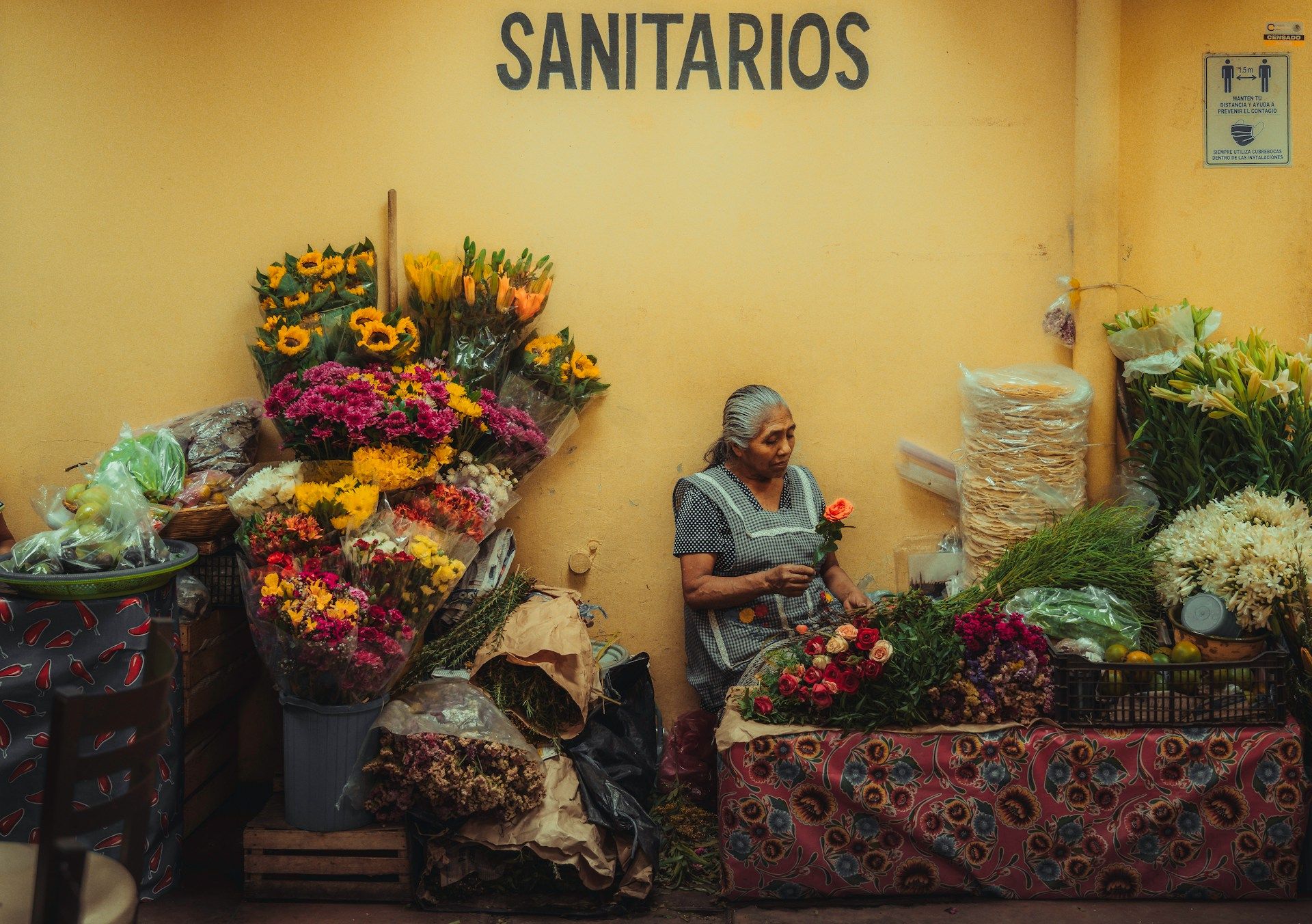
Before starting, I want to put this essay into context. Throughout this year, I have been taking the diploma course in Latin American and Inclusive Design at UNRN, directed by Postdoctoral researcher Mariana Pitaluga.
Decoloniality has been a topic I've had a complicated relationship with, but this diploma has helped me immensely to understand its theoretical foundation at its root and, mainly, to identify it in my daily practice. If you have the opportunity, join a future cohort; I believe it is fundamental for the current challenges we face in design in our region.

Introduction
For the past 5 years, I have dedicated myself to user experience design, focusing on the development of digital products. During these years, I have rarely had the opportunity to stop and reflect on what I have been doing, or how the design I create contributes—or fails to contribute—to perpetuating traditional systems in the areas where I've worked, such as finance, security, or health. However, in the feminism seminar I recently attended, I was able to think deeply about how the technology that plays a key role in our lives today, far from being neutral, can reinforce the very patriarchal and colonial systems we aim to overcome.
Today, connectivity seems ubiquitous, but its distribution remains marked by inequality. According to the United Nations Development Programme, by 2024 in Latin America, 74.8% of urban households have internet access compared to 35.8% of rural ones. Furthermore, connecting people does not mean they possess the skills or resources to use the web autonomously.
This challenges the idea that digital solutions are always the definitive answer for humanity, as we do not have a homogeneous system for everyone. Over time, we have seen that technology further marginalizes already vulnerable people and further enriches those who are already wealthy.
An example of this is found in Chile, where in 2021, according to journalist Constanza Cabrera (2025) via the newspaper El País, the company World—founded by Sam Altman, who also owns OpenAI and ChatGPT—installed devices where over 200,000 people across the country lined up to scan their eyes in exchange for cryptocurrency. In the article, Cabrera indicates that a report by the NGO Amaranta detected cases where women gave their biometric data to this company hoping to improve their finances. The project promises to grant a certain amount of coins monthly to users who register their irises in the database, while men, for the most part, scanned their irises out of mere curiosity.
In addition to the above, the article also highlights the gender gap that exists in technological literacy: of the people surveyed, only three stated they were able to withdraw the money on their own. The rest had to rely on their partners, friends, or strangers in Facebook groups to be able to use that money. Despite this, in 2024, Chile's National Consumer Service detected infractions by the company World because it "encourages capturing iris information without informing [users] of the future use of that data." This is relevant because the more we digitize our bodies on the digital web, the more we must ask ourselves who holds that data. For vulnerable regions and groups, this becomes an extreme risk to the security of their identity and the perpetuation of their social, political, and economic circumstances.

With this preamble, the essay will seek to answer the question: "What does it mean to be a feminist designer with a decolonial gender perspective?" in the context of user experience design. I will focus on the digital products we develop in Latin America, analyzing how the particularities of our region—such as the connectivity gap, informal economies, or data extractivism—intersect with gender inequalities. From there, I will outline criteria and practical examples to practice a UX that does not reproduce, but rather dismantles, the power systems that run through it.
Analysis
Before getting to the heart of the matter, it is worth describing and dismantling the idea of technological neutrality. Many arguments are based on the premise that an artifact—whether an algorithm, an application, or an interface—lacks direct agency, and that everything good or bad happens afterward, when people use it. However, according to British researcher Stephanie Hare in her book Technology Is Not Neutral (2022), "All people have values, and those values influence the decisions we make." For those of us who contribute to product development through design, every choice we make (what data we collect, what kind of body we normalize, or how we define a product's success) already distributes benefits and risks from some people to others.
With this clear, the starting point of my essay is to recognize that designing does not consist solely of "giving shape" to an object or an interface, but of deciding (consciously or unconsciously) which variables matter and which are left out. Argentine researcher Mariana Pittaluga (2017) points out that every project is born from an interweaving of sociocultural dimensions that the team selects and prioritizes; what is left out of that framework simply disappears from the final product. Seen this way, developing digital products is an act of power that defines who will be able to use (or not use) the tool and under what conditions.
In this light, the proclaimed neutrality of technology is an illusion. An example of this is presented by British feminist journalist and activist Caroline Criado Perez in her book Invisible Women: Exposing Data Bias in a World Designed for Men (2019). She mentions that failing to include women's perspectives is a major driver of an unintentional male bias that attempts (often with good intentions) to pass as "gender neutrality." In digital product development, the result is supposedly "neutral" interfaces that, in reality, are optimized for the male experience by default. Excluding women's perspectives is not a marginal flaw; it is the primary mechanism through which a design ends up reproducing gender biases under the guise of objectivity.
To delve deeper into the point already raised by Hare, Pittaluga, and Criado Perez—that every design decision is political—it is worth pausing on the critique of Eurocentrism developed by Argentine-Mexican philosopher Enrique Dussel.
In his essay "Transmodernity and Interculturality" (2005), Dussel notes that European modernity instituted a center that proclaims itself "universal" and pushes the rest of the world to the condition of periphery: "Europe constituted itself as the center, declaring its margins as backward or not yet modern." This gesture is not only geographic; it defines who produces the standards of knowledge, who controls the infrastructure, and, regarding design, who the "normal user" is—or as we know it in UX, the "user persona."
When we design with the assumption of products that are always connected, or at the government level with 100% online procedures, we reproduce the center-periphery logic that Dussel denounces: the universal user of digital products is, in practice, the urban inhabitant of the Global North, and all other realities are reduced to edge cases or, worse yet, completely omitted.
In Mexico, this technological omission translates into dispossession and danger for women and vulnerable communities:
- Platform Work: A report by La Cadera de Eva, written by Raquel Prior (2023), documented how delivery women for apps like Uber Eats and Rappi suffer sexual harassment, kidnapping attempts, and harassment through calls and messages to their personal phones. The group Ni Una Repartidora Menos points out that 36% have experienced this violence without any digital or institutional protection. These platforms presuppose a male, urban delivery driver without caregiving responsibilities, leaving out any alerts, reporting channels, or data encryption that would protect women.
- Digital Government Services: Christian Jiménez (2021), a correspondent for the newspaper El Universal, exposed that in communities on the Coast of Oaxaca, many older adults, including Indigenous women, lacked internet, stable electricity, and even a CURP (an official identity document in Mexico), while registration for the COVID-19 vaccine only worked online: "Elderly people without internet and even without CURP... thinking about the internet is not only distant, but even absurd."
These examples show how the biased selection of variables turns rural and gender peripheries (informal workers, older people without digital access) into obstacles to the "ideal flow" for a digital product or procedure.
For Breny Mendoza, interviewed in 2016, "Every feminist struggle must be simultaneously anticolonial and anticapitalist, because the dominations of sex, race, and class interweave and feed off each other." In UX design and digital product development, this translates to:
- Executing situated projects: Recognizing precarious infrastructures in our context, such as intermittent internet, total lack of connection, or irregular electricity.
- Including cultural and gender diversity: Understanding all use cases in every phase and treating them with the same seriousness as normalized cases.
- Co-creating with communities: Design today has a more important mission than just creating products; it must sustain the collective proposals of local communities.
Conclusions
Writing this essay and relating it directly to my profession has made me reflect deeply on how design configures our reality through the intentions of the people executing it—from the choice of variables to the definition of the universal user—because, consciously or unconsciously, it carries values and beliefs. Although today we can undertake local projects, the same gaps in purchasing, cultural, and social power continue to concentrate the ability to innovate in the hands of a few. Meanwhile, foreign companies enter our territories as new extractors of data and labor.
I consider innovation in our region to be an important step in our development, since no one knows the problems we face better than us, the inhabitants of the region. However, we must also recognize the pluriverse of problems, situations, and conditions in which other people live. Personally, I live in Mexico City, and I have realized that I cannot even begin to know what people living on the coasts, in the mountains, and throughout the periphery of Mexico experience. That is why I also don't believe it is a good idea for me and other designers to take a "savior" stance toward places where the culture, geography, and other conditions differ.
Therefore, I conclude that to be a feminist designer with a decolonial gender perspective in digital product development, one must detach from the simplistic idea that all the problems in our region will be solved with an app or a digital procedure, and recognize that our tools can perpetuate or challenge hierarchies of gender, class, and territory. As Breny Mendoza suggests, any emancipatory proposal must be anticolonial and anticapitalist, questioning not only the "how" of the proposed solution but also "for whom" and "under what economic logics" the design is financed and operated. Because while governments or companies aim for process efficiency and automation to save time, there are more pressing problems in areas that have been made invisible by the rush for development—a development that only benefits a few in the center, while the periphery becomes ever more distant and precarious.
To move in that direction, I believe that interdisciplinarity—both among different types of design and with other areas of knowledge and action—is an appropriate response. It helps us understand not only the axis of action where design must be executed, but also how to prepare for the impact generated after implementing a proposed solution in a specific place. Design for care, not for extraction.
Bibliography
- Cabrera, C. (2025, February 11). Una maternidad sin redes y pagar deudas: los motivos que impulsaron a las chilenas a vender los datos del iris. El País. https://elpais.com/chile/2025-02-11/una-maternidad-sin-redes-y-pagar-deudas-los-motivos-que-impulsaron-a-las-chilenas-a-vender-los-datos-del-iris.html
- Criado Pérez, C. (2019). Invisible Women: Exposing Data Bias in a World Designed for Men. Abrams Press.
- Dussel, E. (2005). Transmodernidad e interculturalidad. In E. Dussel, Filosofía de la liberación. Historia mundial y crítica (pp. 25–35). Siglo XXI.
- Hare, S. (2022). Technology Is Not Neutral: A Short Guide to Technology Ethics. London Publishing Partnership.
- Jiménez, C. (2021, February 9). Ancianos sin internet y hasta sin CURP, registro para vacuna Covid desnuda la desigualdad en Oaxaca. El Universal. https://oaxaca.eluniversal.com.mx/estatal/ancianos-sin-internet-y-hasta-sin-curp-registro-para-vacuna-covid-desnuda-la-desigualdad-en/
- Mendoza, B. (2016). Entrevista a Breny Mendoza: Feminismo decolonial y anti-imperialismo. In Y. Muslera & O. Araneda (Eds.), Un diálogo con Verena Stolcke (pp. 45–53).
- Pittaluga, M. (2017). Diseño y complejidad: La expansión del campo del diseño. Área. Agenda de Reflexión en Arquitectura, Diseño y Urbanismo, 23, 91–103.
- Prior, R. (2023, May 15). Ni Una Repartidora Menos: acoso y secuestro en apps de reparto. La Cadera de Eva. https://lacaderadeeva.com/
- United Nations Development Programme. (2024). Missed connections: An incomplete digital revolution in Latin America and the Caribbean. https://www.undp.org/